


With the current trend toward products that are better for our health and the environment, silicone, and in particular its use in hair care, is at the heart of every debate. Less well known is its cousin the “quaternium,” or “quats,” which have the same effects.
Why are these substances increasingly controversial, and what damage do they do to our hair and to the planet? LAO explains it all in this new article.
Why do hair products contain silicones?
Let’s start with a quick look at the science and structure of hair. The outer layer of the hair is made of a substance called cysteine. On virgin hair (hair that hasn’t yet been exposed to harsh products), a fatty acid, 18-MEA, attaches to the cysteine, and together they give the outer layer of the hair its hydrophobicity (it doesn’t like water and tends to repel it).
The purpose of this layer is to regulate how much water enters the hair, to prevent swelling caused by absorbing too much water.
With chemical treatments or repeated exposure to heat tools, the bond between 18-MEA and cysteine is broken. Once the 18-MEA layer is lost, the hair becomes hydrophilic (it loves water) and the cuticles are exposed to further damage.
The goal of hair products is to give hair a certain level of hydrophobicity that can prevent moisture loss, control moisture absorption and protect hair from further damage caused by friction.
For the hair care industry, silicone turned out to be one way of meeting this need. But, as we will see, silicones end up damaging hair even more.
How do silicones actually work?
Silicones are positively charged, while hair itself has a net negative charge. When hair is damaged, the bond between 18-MEA and cysteine is broken and cysteic acid forms on the surface, so the hair is even more negatively charged.
The long polymer chains that make up silicone create several points of contact with the hair and bind to it through ionic interactions: the positive areas of the polymer are drawn to the negative areas of the hair. In doing so, they help smooth the surface of the cuticles by filling in the gaps in the hair.
Two families of silicones
There are two types of silicones: the smaller ones, which are water-soluble, and the larger ones, which don’t wash out with water.
Non-soluble silicones
When you use hair products containing silicones that aren’t water-soluble, they “stick” to the surface of your hair and form a film around it. This film gives an impression of healthy, shiny hair. Your hair is easier to detangle, feels fuller and has less static.
Under this layer of silicone residue, however, your hair is smothered and dried out, because the hydrophobicity of silicones is very high. Not only do these silicones not wash out with water, they also prevent water, air and the nutrients essential to healthy hair from getting in. Hair becomes dry and brittle without you noticing right away.
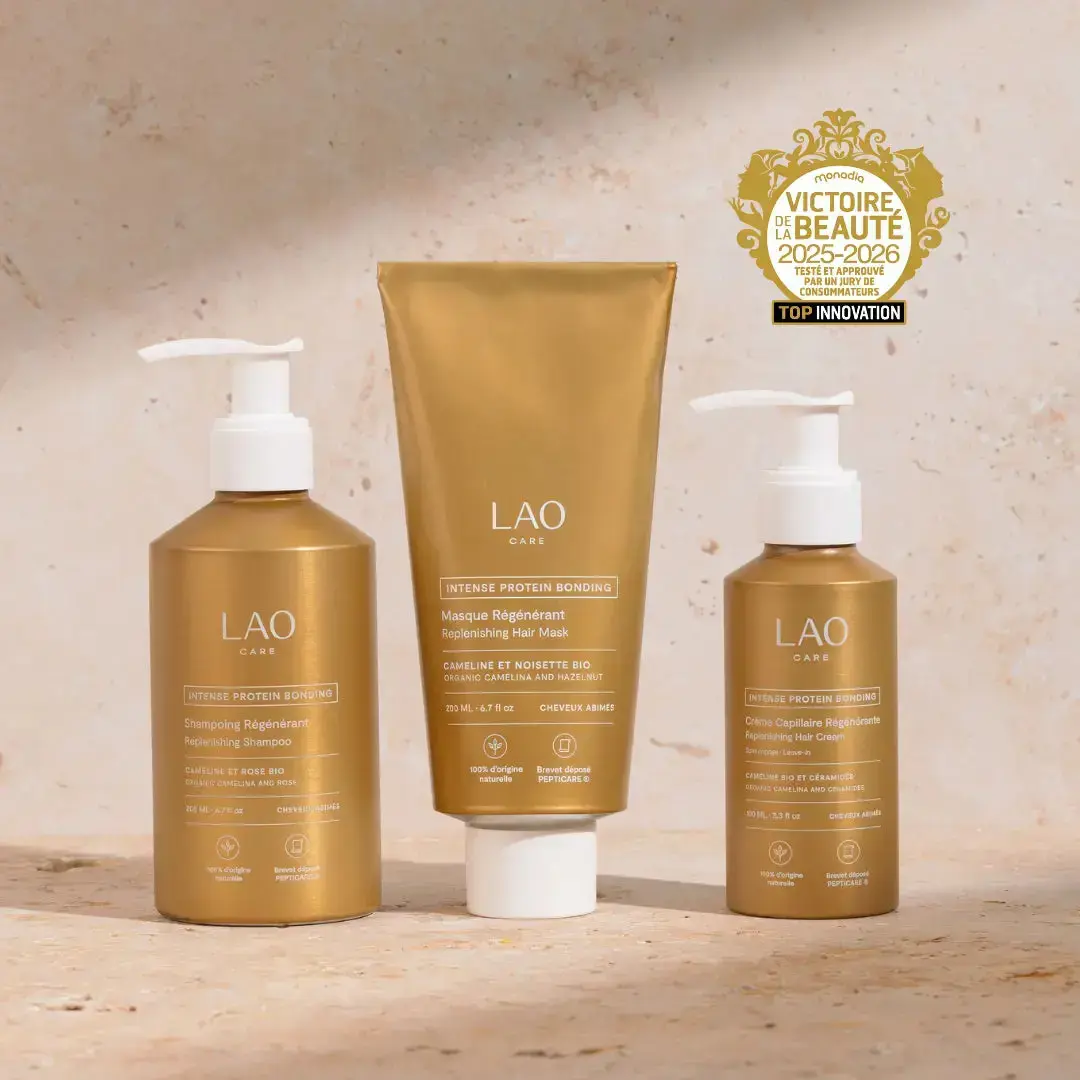
👉 This is exactly the problem we developed the LAO Care Bond Repair Treatment to solve: it repairs the hair’s internal bonds and restores strength and shine from the 1st application, with no silicones or quats.
With every shampoo, conditioner and silicone-based treatment, the small deposits left on the hair build up, giving it a greasy, weighed-down feel and look. To counter this, some people shampoo more often, which causes more mechanical damage and strips the hair of its natural oils.
Silicones are very polluting: they flow down the drain and end up in nature. They are not biodegradable and can take several centuries to disappear completely.
Some non-soluble silicones commonly found in hair products:
Dimethicone
Cyclomethicone
Amodimethicone
Phenyl Trimethicone
Cetearyl Methicone
Dimethiconol
Stearyl dimethicone
Ingredients ending in "-cone"
Amodimethicone
Water-soluble silicones
These silicones wash out easily with gentle shampoos and build up less on the hair. Even though they seem less harmful, they are still pollutants for the environment, and they will damage dry, weakened hair even more.
This family includes:
Dimethicone Copolyol
Lauryl Methicone Copolyol
Any silicone with PEG as a prefix
Watch out for hair products guaranteed “silicone-free”:
Quaterniums
Less well known to consumers, quaterniums act on hair in the same way as silicones. They work like a glue that temporarily gives hair a better appearance. The name is different, but the film-forming effect is exactly the same.
You’ll find them in ingredient lists under the name quaternium-n or polyquaternium-n (n being a number).
Quats, just like silicones, are not biodegradable, and their manufacturing process is itself polluting.
Hair products that you think are healthy and silicone-free may contain substitutes that act in exactly the same way, to reassure and mislead the consumer. Check the products you use carefully! To help you decode labels, see our guide to choosing a natural shampoo.
How do you remove silicones from your hair?
If you want to stop using products that contain silicone or quaterniums, you first need to remove the residue still in your hair.
There are several natural methods for this, and we’ll walk you through two of them:
Apple cider vinegar rinse
Apple cider vinegar is an ally for your hair! It is rich in vitamins, which promotes hair growth and reduces hair loss. Its pH, similar to that of hair, helps close the scales of the hair shaft and makes detangling easier. Your hair will be protected from external aggressors and regain a natural shine. People prone to dandruff will also see it greatly reduced.
How do you apply it to your hair?
How to do a vinegar rinse:
Mix 5 tablespoons of vinegar with 10 tablespoons of cold mineral water in a bottle
Apply the mixture to your hair after your conditioner, every 3 or 4 shampoos
Massage your scalp and your lengths
No need to rinse, the smell will fade!
Baking soda clarifying
Baking soda cleanses and purifies your hair deeply. You can do a clarifying treatment if you want to stop using conventional hair products that contain silicones, but also if your hair tends to get greasy quickly or looks dull.
How to clarify with baking soda:
Add a teaspoon of baking soda to your dose of shampoo 1 time a month, or more often if you’re in transition
Massage your scalp and your lengths
Leave on for a few minutes
Because baking soda is very stripping for your hair, it’s important to follow your clarifying with a natural care mask
You can do a vinegar rinse to close the scales properly and prevent the hair from being altered.
Baking soda is still very stripping, though: to understand its limits and our precautions, read our dedicated article on clarifying with baking soda.
👉 If you’d like a gentler, more regular alternative, our LAO Care Purifying Shampoo also purifies the scalp and removes residue from conventional products, without being harsh on the fiber.
Natural alternatives
To repair the damage caused by silicone-based products and care for the hair shaft, consider using suitable natural oils instead of conditioners and masks containing silicones. We recommend castor oil or jojoba oil, which will care for your hair.
👉 These oils are also part of our formulas: for example, our Bond Repair Hair Mask combines organic hazelnut oil and the PeptiCare® complex to repair the fiber deeply.
If you’re just starting your transition to silicone-free care, our natural hair routine with LAO guides you step by step, and the sebum cure experience report shows how hair rebalances once it’s free of residue.
Conclusion
If you’ve made it to the end of this article, you’ve understood: we strongly recommend avoiding silicones and quaterniums if you want to keep your hair in good condition over the long term. Don’t panic if your hair feels sticky or drier during your transition to natural cosmetics; you can do a clarifying treatment or look after your hair with apple cider vinegar!
👉 That’s why all our LAO Care routines are 100% natural origin, free from silicones and quats, and designed to protect your hair while respecting the planet. Discover the Bond Repair Treatment if your hair is damaged, or our Softness and Lightness routines depending on your everyday needs.
Not sure which products are right for you? Find your ideal routine in just a few minutes.
FAQ - FREQUENTLY ASKED QUESTIONS
1. Why are silicones used in hair products?
Because they smooth the fiber, give an impression of shine and make detangling easier. But this effect is artificial: under the silicone film, the hair gradually dries out and gets damaged.
2. What is the difference between soluble and non-soluble silicones?
Non-soluble: they build up on the hair, form a smothering barrier and are very polluting (e.g. dimethicone, amodimethicone).
Soluble: easier to remove, but they are still polluting and weaken dry or damaged hair.
3. What are “quats,” and why should they be avoided too?
Quats (quaterniums or polyquaterniums) are substitutes for silicones. They create the same misleading film-forming effect and are not biodegradable. Some “silicone-free” products contain them, which misleads consumers.
4. How do I remove silicone residue from my hair?
Two natural methods:
Apple cider vinegar rinse (water + vinegar dilution) to close the scales and add shine.
Baking soda clarifying (1 tsp mixed into the shampoo) to purify the fiber, followed by a natural care mask.
5. What natural alternatives can replace silicones?
Go for natural care such as plant oils (castor, jojoba, hemp) or innovative care without film-forming actives, like LAO Care, which offers 100% natural routines, scientifically proven to repair the fiber without weighing it down.
Sources
-
https://cosmeticobs.com/fr/articles/lingredient-du-mois-10/les-silicones-84
Tuesday, September 7, 2010, CosmeticOBS (author’s name not given) -
https://www.thehairfuel.com/silicones-in-hair-care-all-you-need-to-know/
April 1, 2019, The hair fuel (author’s name not given) -
https://www.researchgate.net/publication/333324421_Comparison_of_Silicone_Quaternium_20_and_Polyquaternium_10_in_hair_care_formulations
Anthony J. O'Lenick, July 2018
Leave a comment