


With the rise of cosmetics-scanning apps and a number of articles in the media, there is a certain distrust about the composition of the products we use every day on our skin and hair. Among the ingredients consumers fear most in hair care, sulfates and their derivatives top the list. But what is their function, really? What impact do they have on the environment?
The LAO team decided to dedicate an article to them this Sunday. Happy reading!
Where sulfates come from
Sulfates are produced by combining sulfuric acid (H2SO4) or sulfur trioxide SO3 with a fatty alcohol (lauric acid, for example). The first part, derived from sulfur, most often comes from petrochemicals (60%), and the second part is of plant origin.
Sulfur is an element but also a mineral (known as native sulfur). It is often found as a by-product of industrial activities.
Petrochemicals
Petroleum contains from 0.5% to 3% sulfur. It is mainly used (90%) by the phosphate fertilizer industry, but it is also found in many cosmetics.
The problem with sulfur chemistry lies in its petrochemical origin: oil desulfurization, natural gas purification… And it causes serious environmental problems: smog and acid rain, atmospheric aerosols….
Natural extraction (native sulfur)
Sulfur is also found naturally in the form of yellow stones.
Sulfur is generally associated with volcanoes, since fumaroles contain it. It is also found in sedimentary deposits, where it comes from the decomposition of gypsum.
Natural sulfur extraction is less polluting but very unethical.
In eastern Java, Indonesia, lies Kawah Ijen, a volcano that has been turned into a sulfur mine for nearly 100 years. Working conditions there are extremely harsh: men toil for a few dollars with no protection from toxic gases and other hazards. On top of that, this volcano sits next to the most acidic lake in the world!
The company that owns the mine uses the sulfur to refine sugar, make matches and even produce medicines.
Sulfates in cosmetics
Their role in cosmetics
Sulfates are ingredients found in cosmetic products such as shower gels, shampoos and facial products. They act as surfactants, meaning they bind the fatty substances in a formula to water. Their function is therefore cleansing.
A classic shampoo, for example, contains from about 5% to about 50% of a sulfate-based surfactant or a blend of different sulfates.
Sulfates have many properties in cosmetics, such as:
- foaming power
- a creamy texture
- a low price
This makes them an ingredient of choice for manufacturers.
They are easy to spot in an INCI list (list of ingredients) because the word “sulfate” often appears in their names: sodium lauryl sulfate, sodium laureth sulfate, ammonium lauryl sulfate...
A potentially irritating ingredient
However, they are highly controversial because of their potential to irritate the scalp and skin and their drying effect on hair.
Sulfates are irritating ingredients for the skin and scalp that can cause contact dermatitis. They tend to strip the surface of the epidermis by removing part of the hydrolipidic film that covers it. The skin is then exposed to external aggressors.
Repeated use of foaming products containing lauryl or laureth sulfate leaves skin dehydrated and dry.
In the long term, sulfates can have a harmful effect on health; we know that our body absorbs part of what we apply to it. By weakening the epidermis, they can make it easier for unwanted substances to enter the body.
Sulfates and oily hair
Given their stripping nature and their ability to damage the hydrolipidic film on the scalp and hair, we can only recommend spacing out your shampoos; the ideal is 1 to 2 per week.
Washing too often amplifies the effect of sulfates and stimulates the sebaceous glands, which produce more and more sebum in an attempt to rebuild the hydrolipidic film! In short, if your hair gets greasy again quickly, it’s time to switch to a sulfate-free shampoo and space out your washes!
Different types of sulfates
As mentioned above, there are different types of sulfates, some more irritating than others and some with a more polluting manufacturing process. Sulfates are found in many cosmetic products, including some with organic labels! Here’s why:
Organic labels sort sulfates into 2 groups, depending on how irritating they are likely to be.
So sodium lauryl sulfate and ammonium lauryl sulfate are allowed in organic products because they are of plant origin (coconut or palm oil) and their manufacturing process is less polluting.
However, labels take into account the percentage of these ingredients in a formula, which must not exceed a certain quota. In that case they are not considered irritating, and therefore not harmful to the skin. Under an organic label, these ingredients are only found in rinse-off products, which don’t stay on the skin for long and don’t penetrate into the bloodstream.
The bête noire of organic labels is Sodium Laureth Sulfate, because its manufacturing process uses a product that is very toxic to health and the environment: ethylene oxide. This is called ethoxylation: a chemical reaction in which ethylene oxide is added to a fatty alcohol, for example (here, lauryl) to produce surfactants.
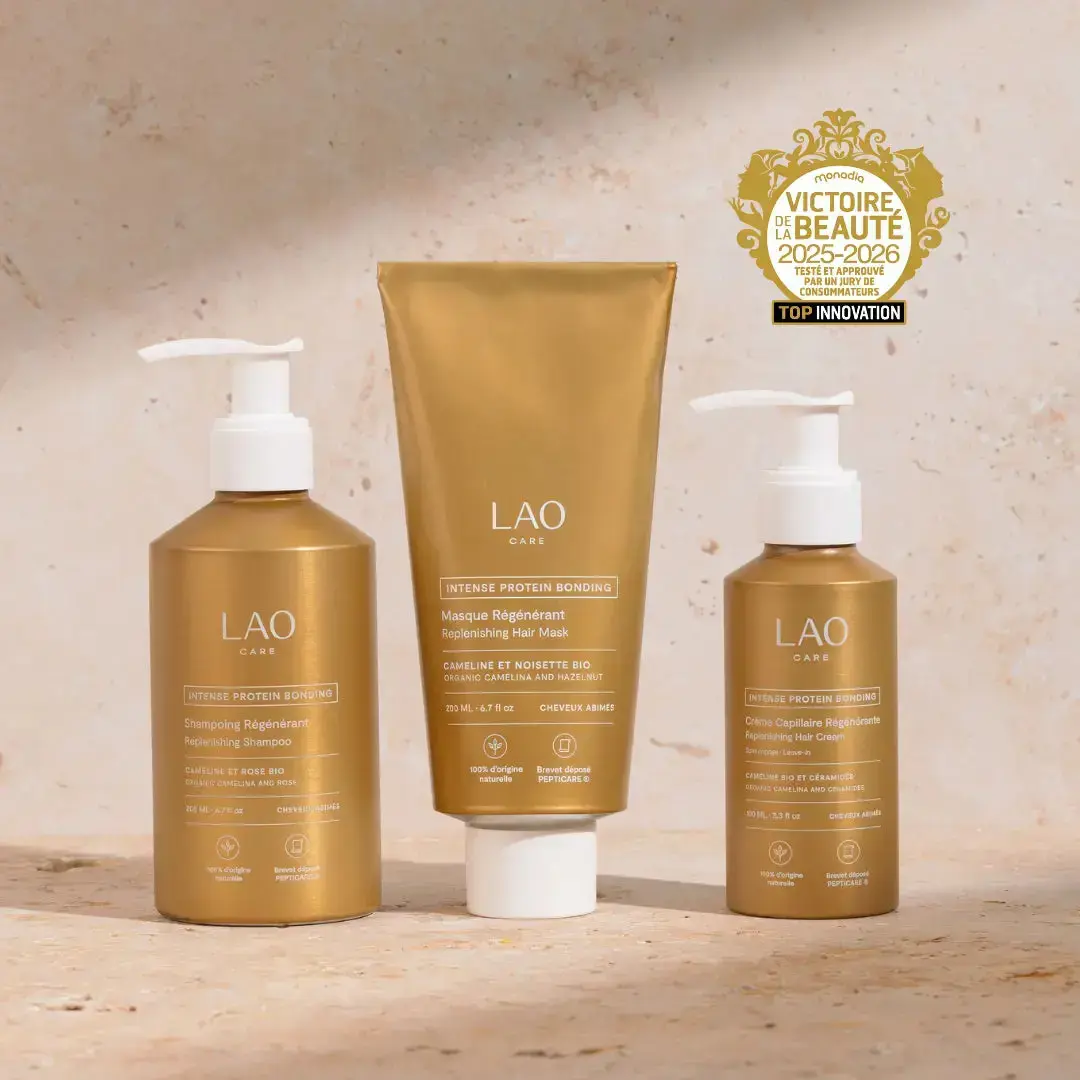
At LAO, we decided to replace sulfates with natural, very gentle surfactants: Decyl Glucoside, Caprylyl/Capryl Glucoside and Disodium Cocoyl Glutamate. They are derived from plant-based fatty alcohols and sugars.
Sources:
Amandine Georgel. Transcutaneous penetration of active substances. Application in dermocosmetology. November 2008. [Online] https://hal.univ-lorraine.fr/hal-01732837/document
Cosmébio. Webinar on Sulfates. 2020.
https://fr.wikipedia.org/wiki/Laureth_sulfate_de_sodium
https://fr.wikipedia.org/wiki/Sulfate
Leave a comment