


Every summer, the same story: you come back from vacation with dry lengths, split ends and color that has faded. The sun, sea salt, pool chlorine and heat have taken their toll on the fiber. The good news is that you can see it all coming. In this article, we give you 5 practical tips to keep your hair from getting damaged in summer, without giving up the beach or the sun.
Before we start, one detail that changes everything about how you protect your hair in summer. Your lengths are a keratin fiber, a material that doesn't regenerate on its own the way skin does. Once the cuticle has been attacked by UV or dried out by salt, it doesn't "repair" itself spontaneously. So the whole challenge of summer is to protect the fiber at the surface, seal in the water it contains and sheathe the cuticle before, during and after exposure. As for the scalp, which is alive, the goal is different: you keep it clean and balanced so that it doesn't go into overdrive with summer sweat and sebum.

1. Protect the fiber from UV and from drying out in the sun
The first step to keep your hair from getting damaged in summer is to understand enemy number one: the sun. UV rays attack the cuticle, the film of scales that surrounds each strand. When it lifts, the fiber loses its shine, becomes rough and lets the water it contains escape. The result: dull lengths that break, and color that lightens or turns brassy. We also dedicate a whole article to protecting your hair from sea water and sun, which is worth reading alongside this one.
Create a physical barrier
The simplest way is still the most effective: a wide-brimmed hat, a cap, a scarf. During the strongest hours, between noon and 4 p.m., physical protection beats any hair care product. Think of your scalp too, which can literally get sunburned along the part.
Sheathe before exposure
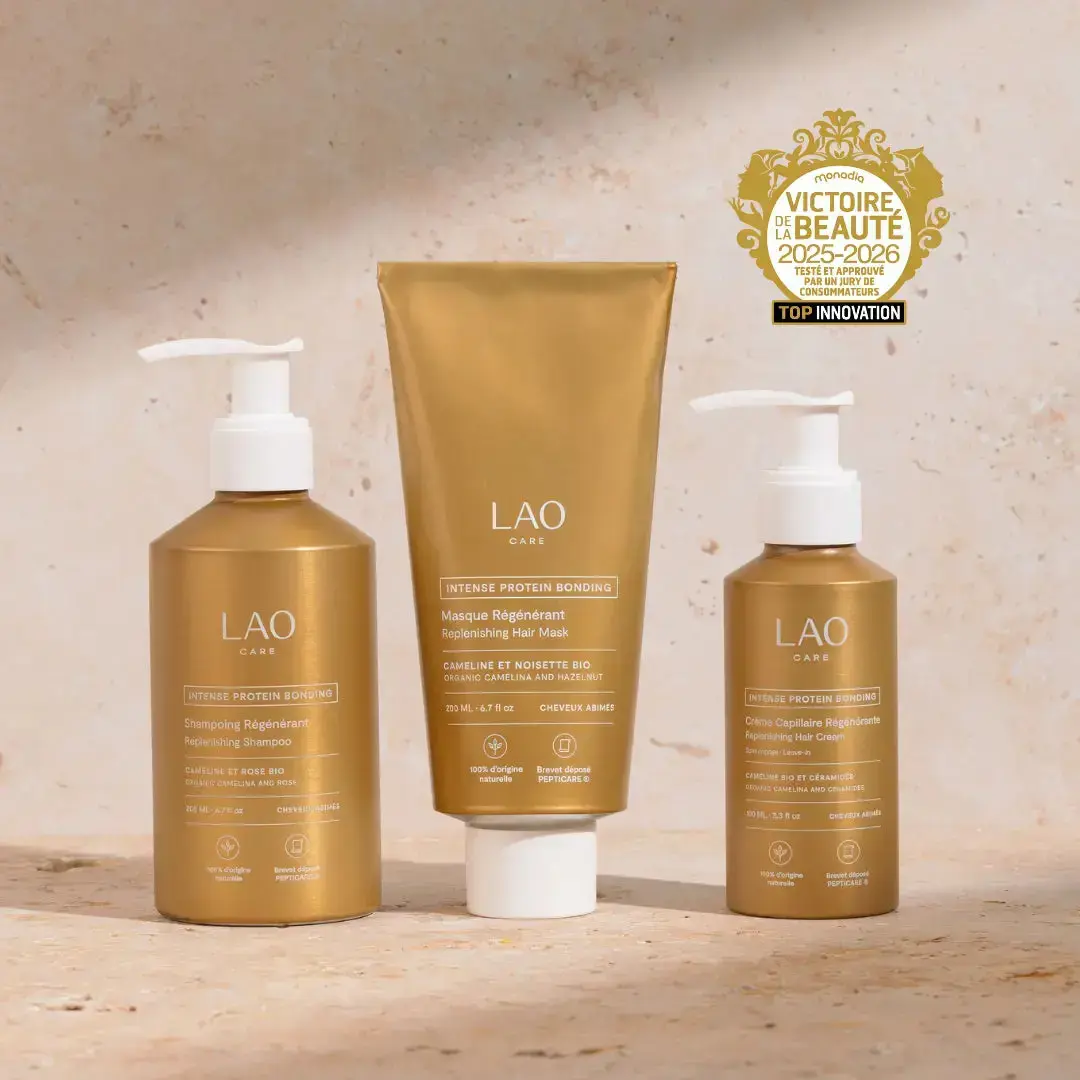
Before heading out, apply a leave-in care product to your lengths and ends. A hair cream that sheathes the cuticle limits water loss and acts as a barrier. That is exactly the role of the Bond Repair Leave-In Cream: it seals in water at the surface and smooths the scales, so that the fiber copes better with the sun. If your lengths are already weakened, take a look at our damaged and weakened hair collection to find the right routine.

2. Rinse after the sea and the pool, every time
Sea salt and chlorine are two of the main culprits behind hair damaged by sun and water. Salt has a drying effect: as it evaporates, it pulls water out of the fiber and leaves crystals that stiffen the cuticle. Chlorine is an oxidant: it weakens keratin and makes colors fade, especially blonde and color-treated hair.
The right move before swimming
A tip few people know: wet your hair with fresh water before getting in the water. A fiber that is already saturated with fresh water absorbs far less salt and chlorine. It's simple mechanics, and it makes all the difference over a week of daily swims.
Rinsing after every swim
Rinse with fresh water as soon as you get out of the water, without waiting for the salt to dry in the sun. In the evening, a proper gentle shampoo finishes the job by removing residue without stripping. The Bond Repair Shampoo cleanses gently while respecting the balance of the scalp, which avoids the "straw" effect of shampoos that are too harsh after the beach.
3. Limit the heat from styling tools
We think about it less in summer, but the hair dryer, flat iron and curling iron add a layer of heat stress to a fiber already tested by the sun. Combining UV and a 200°C (392°F) flat iron is the perfect recipe for split ends. To avoid them, we explain how to avoid split ends all year round.
Go for air-drying
Summer is the ideal season to let your hair dry naturally. Gently blot it in a microfiber towel, without rubbing, then let the air do the rest. You limit breakage and you save time. If you're frustrated with the result when air-drying, here is how to dry your hair gently and without heat.
Protect when you can't skip it
If you heat-style, always apply a sheathing treatment first and lower the temperature. A fiber that is sealed and smoothed at the surface withstands heat shock better than a bare one. Here again, a leave-in care product that sheathes the cuticle makes a real difference.

4. Sheathe the fiber and seal in water
This is the heart of the matter when you want to protect your hair in summer. Healthy hair holds on to the water it contains thanks to a tightly closed cuticle. In summer, everything conspires to open that cuticle: UV, salt, chlorine, heat. The fiber then lets its water escape and becomes dry, porous and brittle.
The role of the mask
Once or twice a week, a bond repair mask sheathes the fiber deeply. The Bond Repair Hair Mask smooths the cuticle and seals in water at the surface: lengths regain softness and shine, and better withstand the stresses of the following days. Apply it to your lengths and ends, never to the roots, and leave it on for as long as a sunbath in the shade.
The everyday leave-in habit
Between masks, the Bond Repair Leave-In Cream takes over on damp or dry hair. A few drops on the ends are enough to keep the fiber sheathed all day. It's this repeated habit, more than any miracle product, that keeps your hair from getting damaged in summer. To understand the full logic of protect, repair, sheathe, discover our Complete Bond Repair Treatment.
5. Take a bond repair routine with you when you travel
The best routine is the one you actually follow, even on vacation. The problem is that we often travel with carry-on only, with no room for 250 ml bottles, and end up using the hotel shower gel on our hair. In a single week, the benefit of a whole year of care can be wiped out.
The travel-size solution
That is exactly why we created the Bond Repair Treatment Travel Kit. It brings together the 3 steps of our Bond Repair Treatment, Shampoo, Mask and Leave-In Cream, in mini 50 ml sizes, in a natural cotton-linen pouch built to last. The containers comply with carry-on liquid regulations, so you can take it on the plane with no hassle.
The unbroken ritual
In practice: you cleanse gently after the beach with the shampoo, you sheathe deeply with the mask twice during the week, and you seal in daily with the cream. The same formula as at home, the same routine, everywhere. It's the simplest way to come back from vacation with intact lengths rather than dried-out ones.

In short: protect rather than repair
Keeping your hair from getting damaged in summer comes down to one idea: you protect the fiber during exposure rather than trying to fix everything in September. A physical barrier against UV, systematic rinsing after the sea and the pool, less heat, and a routine that sheathes and seals in water every day. With a travel size slipped into your carry-on, there's no reason left to sacrifice your lengths for a great vacation.
Not sure where to start or which routine suits your hair? Take stock in two minutes with our personalized hair diagnostic.
FAQ: protecting your hair in summer
How can I keep my hair from getting damaged in summer when I'm in the sun all the time?
Combine a physical barrier (hat, scarf) during the hottest hours, a sheathing leave-in care product applied before exposure, and a bond repair mask once or twice a week. The goal is to keep the cuticle smooth and closed so that the fiber doesn't dry out.
Do sea salt and chlorine really damage hair?
Yes. Salt dries hair out by pulling water out of the fiber, and chlorine oxidizes and weakens keratin, especially on light or color-treated hair. Wet your hair with fresh water before swimming and rinse every time afterward to limit the damage.
Should I use a mask more often in summer?
Once or twice a week is enough for most hair. During periods of intense exposure, you can go up to twice. The LAO Care Bond Repair Hair Mask sheathes the fiber and seals in water at the surface for softer, more resilient lengths.
Can I take my hair care on a plane?
Yes, as long as the containers are 100 ml or less. The Bond Repair Treatment Travel Kit offers all 3 products in 50 ml sizes, compliant with carry-on liquid regulations.
My hair is already damaged by the sun, what can I do?
You can't "repair" a dead fiber, but you can sheathe it for the long term so that it looks healthier and holds up better. Adopt a complete bond repair routine and trim the most affected ends. Our damaged and weakened hair collection helps you choose, and the hair diagnostic fine-tunes the routine for your case.
Is air-drying really better in summer?
Yes. Skipping the hair dryer and flat iron spares the fiber heat stress on top of the stress from UV. Blot with a microfiber towel without rubbing, then let it dry naturally.
Leave a comment