

With organic and natural cosmetics trending more strongly than ever, and more brands heading in that direction every year, it's time to understand a little better what lies behind the phenomenon. Many people link "natural" with "eco-responsible." But in reality, in the world of cosmetics, one doesn't always imply the other...
Today, LAO explains what a natural cosmetic is, helps you understand the impact of natural cosmetics on the environment, and shows you how to spot cosmetics that are truly eco-responsible. SPOILER: natural doesn't mean eco-friendly!
Natural cosmetics: what are they?
To understand what a natural cosmetic is, you first need to know the difference between natural cosmetics and cosmetics of natural origin, which are two slightly different notions.
What sets natural ingredients apart from ingredients of natural origin is that they are not processed. They go into cosmetic products in their original state.
The upside is that they are excellent active ingredients and keep all of their original properties. The downside is that, very often, these ingredients don't keep well over time, which shortens the products' expiration dates and can lead to more waste if the products aren't sold before that date.
Ingredients of natural origin, on the other hand, go into cosmetic products after a chemical transformation. Careful: chemical doesn't mean harmful or bad for your health and the environment.
Chemistry is about transforming or blending ingredients to obtain new properties. Some natural ingredients can't be used in their pure state, so they have to undergo a chemical transformation before they can go into a product.
Either way, natural cosmetics and cosmetics of natural origin have things in common. Neither contains any synthetic ingredient, meaning one made artificially through a heavy chemical process. The second similarity, as you've probably already guessed, is that both types of cosmetics have all of their ingredients coming from nature.
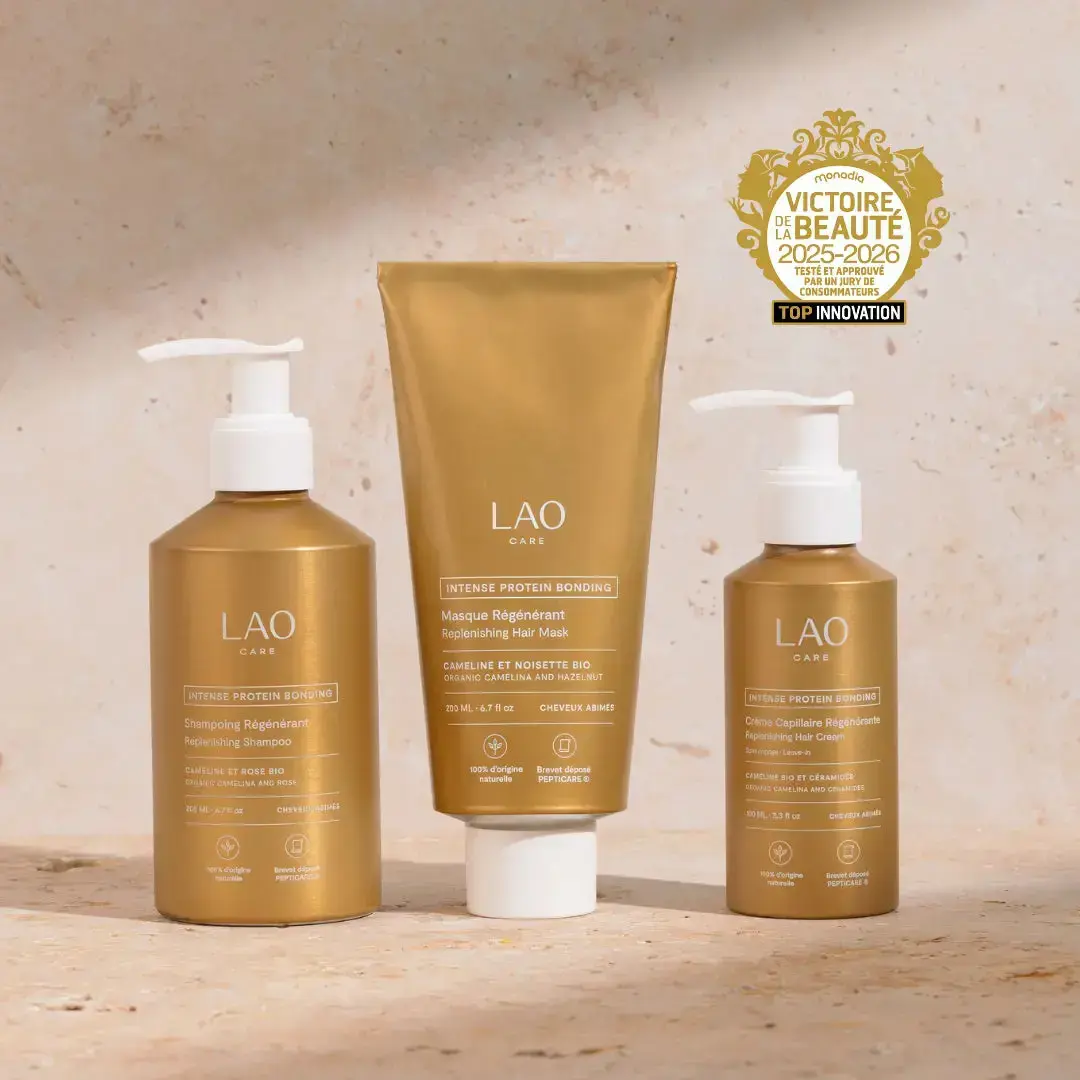
LAO chose to use ingredients of natural origin in its hair care, to benefit from the many things nature can bring to our hair and to create formulas that are sustainable and effective over time.
Are natural cosmetics better for the environment?
Some products contain ingredients of natural origin and/or natural ingredients, but that doesn't necessarily mean they respect the environment. Let us explain:
Some natural products, in order to be sold cheaper or to earn the brand better margins, are made with ingredients coming from the four corners of the planet.
But as you know, flying is far from the most eco-friendly way to travel, especially when the same ingredients, sometimes even of better quality, can be found in France and Europe.
So yes, prices will often be higher, but you have to choose: if you're not the one paying the real price of the product, know that it's most likely the planet, or people exploited in the manufacturing process, who are paying the high price for your cosmetics.
So when you see natural, so-called eco-friendly cosmetics at €4, it's always worth asking what the product is made of and why the price is so low.

At LAO, our washing products are €22, not to make a big margin but because we chose to work with French producers for our organic active ingredients, which are hemp, nettle and lemon balm. We also chose common sense for certain ingredients, such as glucosides, which can't be found in France and are nevertheless essential in the formula of an effective shampoo.
Not all of the ingredients in the shampoos can come from France, but we created simple formulas with just 15 ingredients and chose responsible partners to limit our impact on the environment. To find out everything about where the ingredients of our washing products come from, simply scan the QR code below.

To know whether or not a cosmetic is environmentally friendly, being natural isn't the only criterion to take into account! Since the decree of April 29, 2022, cosmetic brands must provide information on the product's characteristics, such as compostability, the use of recycled materials, reuse options, recyclability, or the presence of hazardous substances.
This information must be stated on the brand's website, and you will normally find it on the page of the product you want to buy!
And if not, don't hesitate to ask for it: it is normally mandatory. Everyone deserves to know what they put on their body or their hair.
How can you recognize eco-responsible cosmetics?
Several labels can help you identify natural and/or organic cosmetic products:
The Cosmos Natural label, the Cosmos Organic label and the organic label were created by the organization Cosmebio and make it possible to spot cosmetics with ingredients of natural origin and organic cosmetics.
The NATRUE Label is also a good indicator of natural and organic products. In a future article, LAO will explain what these labels mean and teach you how to decipher the INCI list of your cosmetic products, so that you have all the keys to choose products that are truly good for your health and respectful of the planet.
However, these labels don't tell you where the ingredients come from! Are they sourced in France or on the other side of the world? Are they harvested from nature in a country with strict environmental standards, as is the case in most European countries, or are they harvested with no regard for protecting the environment? It's up to the brand to tell you all of this.
That's why LAO has built blockchain technology into its products, revealing everything to you, from seed to bottle, through a QR code you simply scan!
To learn more about cosmetics and environmental issues, listen to The Beauty Nerds podcast, in which Lisa, LAO's founder, explains it all 🌿
Leave a comment