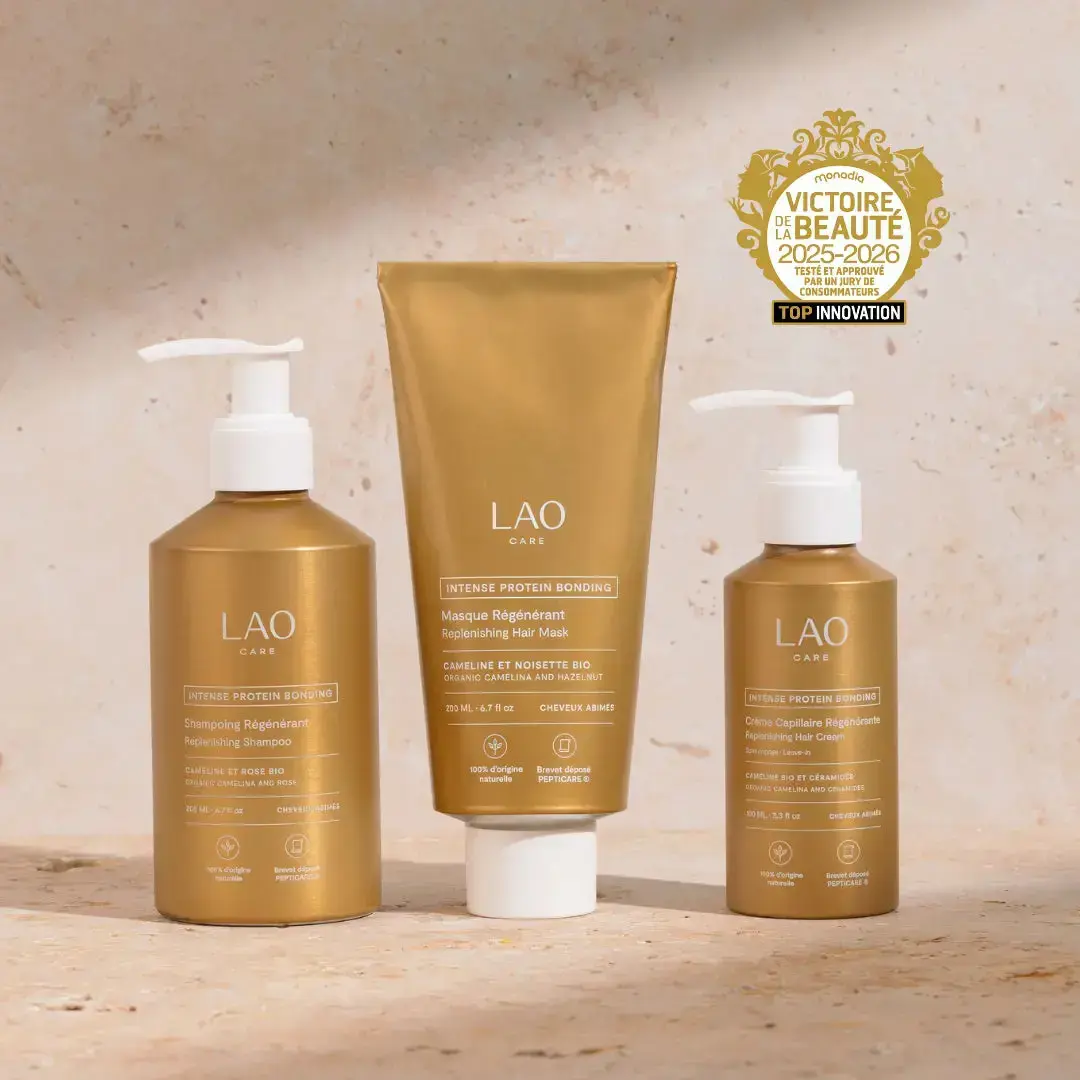
Your hair is with you all your life, and it tells part of who you are. That is why we pay so much attention to it, to its health as much as its beauty.
At LAO Care, we have chosen to share what hair science really says, because it delivers better results than the usual promises. Our conviction fits in one sentence: we don't repair hair, we understand it in order to care for it. It all starts from a simple distinction: the scalp is living skin, the lengths are inert matter. Two realities, two needs, two treatments.
Here, in this complete guide to natural hair care, is everything you need to know to build a natural hair routine that respects your fiber and your scalp.
THE FOUNDING DISTINCTION
The scalp is not the hair
The scalp is living skin: it breathes, renews itself and governs the health of growth. It determines the nature of your hair: oily, sensitive, prone to dandruff. We care for it like the skin of the face, gently, without stripping it. A healthy scalp is the foundation of any beautiful head of hair.
The lengths, on the other hand, are keratin, an inert material. They don't feed themselves, and we don't feed them either: we protect them, strengthen them and rebuild them.
Direct consequence: choose your shampoo for your scalp, never for your lengths. The lengths are treated through rebuilding.
UNDERSTANDING HAIR AND SCALP
The structure of hair
Hair is made up of two parts: the root, or bulb, and the shaft. It is anchored in the follicle, which sits in the dermis. The root, beneath the scalp, is one of the most active organs in the body. As soon as the hair emerges from it, the shaft becomes an inert material, with no living cells.
The shaft is made up of three concentric layers. The cuticle, on the surface, is the most resistant: it is what protects the fiber. Made of scales, the smoother and more tightly closed it is, the healthier, softer and shinier the hair. As soon as a scale lifts, the fiber becomes dull and rough, and holds water less well. Beneath the cuticle, the cortex determines the strength and elasticity of the hair, and then comes the medulla at the center.
Keratin is the main component of hair. This protein provides its protective role and its smooth, shiny appearance. The whole point of a natural hair care routine for the fiber is to protect this keratin and strengthen the cuticle.
L'anatomie de la fibre
Les trois couches du cheveu
Comprendre la structure de la fibre aide à choisir les bons gestes et à ne plus se laisser bercer par les fausses promesses.
La cuticule, la couche protectrice
Faite d'écailles superposées, lisse et fermée, elle fait briller le cheveu et l'aide à sceller l'eau. Soulevée, elle le rend terne et rêche, et la fibre casse. C'est elle que l'on protège.
Le cortex, la résistance
Sous la cuticule, le cortex concentre la kératine et les liaisons qui donnent au cheveu sa solidité et son élasticité. C'est lui que l'on consolide par la reprotéination.
Le follicule, le seul vivant
Sous la peau, le follicule est l'unique partie vivante et nourrie du cheveu. C'est là, à la racine, que tout se joue : la pousse, la vigueur, la santé future de la fibre.
The scalp, living skin
The scalp is the skin covering the skull, and it is where your hair grows. Like all skin, it is made up of three layers: the epidermis at the surface, the dermis where the sebaceous glands sit, and the hypodermis deeper down. It is an organ in its own right, among the most active in the body.
It protects the body from external aggressions, helps regulate temperature and, above all, determines the growth and vigor of hair. We care for it like the skin of the face, gently, without stripping it. That is why we choose a gentle shampoo suited to your scalp: the Purifying Shampoo for a scalp that gets oily fast, or the Nourishing Shampoo for a more sensitive scalp. If you're unsure, the Shampoo Duo lets you alternate according to your needs over the weeks.
The different hair types
Hair is classified by its nature and its texture. Knowing your type helps you choose the right habits, but remember the essential point: shampoo is chosen for the scalp, never for the lengths.
By nature, there are three families. Normal hair is shiny and supple. Hair with a tendency to oiliness corresponds to a scalp that produces more sebum. Dry hair has dull, fragile lengths, often linked to a damaged cuticle that no longer holds water well.
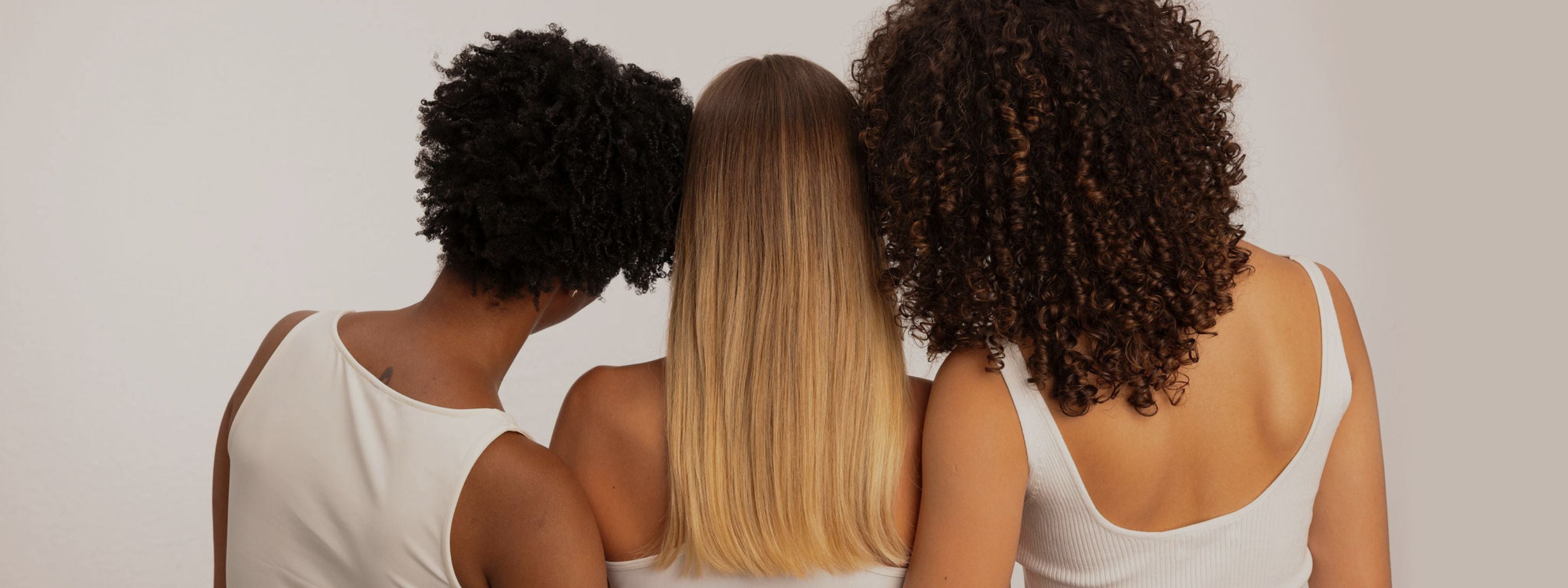
By texture, we speak of fine, normal or thick hair. The Andre Walker classification also sorts hair into four shapes: straight, wavy, curly and tightly curled. Whatever your nature, the logic stays the same: you care for the scalp, you protect the fiber. That is what structures a good natural hair routine.
RECOGNIZE AND UNDERSTAND
The main hair concerns
The oily scalp
An oily scalp produces excess sebum, sometimes called hyperseborrhea. Sebum coats the scalp and part of the lengths, which look shiny and lack volume. An excess can also encourage dandruff.
Several factors come into play: genetics, but also pollution, stress, heat or unsuitable products. Sulfates, found in many conventional shampoos, are often to blame: by stripping the scalp, they trigger sebum overproduction in response. The right answer is a gentle treatment that regulates without being harsh, like the Purifying Shampoo.
And no, washing your hair often does not make it get oily faster. With a gentle, suitable shampoo, washing regularly is even recommended to keep a healthy scalp.
The sensitized scalp
A sensitized scalp shows up as itching, tightness, sometimes redness and flaking. Pollution, stress, an unbalanced diet, overly harsh shampoos and repeated heat can explain it.
To soothe it, go back to a gentle shampoo with a pH below 5.5 that respects the barrier of the scalp rather than weakening it. The Nourishing Shampoo, enriched with hemp oil, is a good ally for delicate scalps.
Dandruff
Dandruff appears when the cells of the epidermis renew too quickly and build up on the surface. A distinction is made between dry dandruff, fine white flakes that don't stick, and oily dandruff, thicker and soaked in sebum.
It often reflects inflammation of the scalp, sustained by excessive heat or an unsuitable shampoo. To limit it, choose a gentle treatment, rinse well and take care of the scalp first. To dig deeper, here is our complete guide to dandruff.
Dry lengths
When the lengths are dry, the cuticle is open: the fiber holds water less well and becomes dull, rough, even brittle, and ends up splitting. The most common cause is the repeated heat of styling tools, which lifts and damages the scales. Our tips for caring for dry hair detail the right everyday habits.
To remedy this, limit heat, protect the fiber and avoid sulfate shampoos that strip. Then add a treatment that sheathes and smooths the cuticle to help it hold water, like the Detangling Conditioner on fine hair, or the Bond Repair Hair Mask on thicker, damaged lengths. Day to day, the Bond Repair Leave-In Cream delivers a dose of protein and makes styling easier. Detangle from the ends toward the roots with a Detangling Comb.
To put it all together, two complete routines exist depending on texture: the Lightness Routine for fine hair, which favors the lightweight conditioner, and the Softness Routine for thicker, damaged hair, which relies on the mask.
Hair shedding
We naturally lose between 40 and 60 hairs a day. Beyond 100 a day on a lasting basis, it is called excessive shedding, which affects women and men alike. When it accelerates, it is called alopecia.
Alopecia can be hereditary, known as androgenetic, or acute, linked to deficiencies, hormonal disorders or chronic stress. When it isn't hereditary, it can be limited by spacing out coloring, eating a healthy diet and using a gentle shampoo that respects the scalp. If the shedding is significant and persistent, it is better to see a doctor: a simple blood test can reveal a deficiency.
Split ends
A split end forms when the tip of the fiber cracks and separates into two or more branches. They are more common on long, dry lengths. Rough brushing, excessive heat or unsuitable products weaken the fiber until it breaks.
A split end can't be repaired: the fiber is inert, and only a trip to the hairdresser gets rid of it. What you can do is prevent them from appearing by protecting the fiber, detangling gently with a Detangling Comb and reinforcing the cuticle every day.
À chaque souci, son geste
Le bon réflexe, en un coup d'œil
La même logique revient toujours : on prend soin du cuir chevelu, on protège la fibre. Voici comment se traduit chaque cas.
Cuir chevelu qui regraisse vite
On régule sans décaper, avec un shampoing doux. Laver régulièrement ne fait pas regraisser plus vite.
Cuir chevelu sensibilisé
On apaise avec un soin au pH bas qui respecte la barrière du cuir chevelu, au lieu de la fragiliser.
Pellicules
Souvent liées à une inflammation : soin doux, rinçage soigneux et chaleur réduite pour calmer le cuir chevelu.
Longueurs sèches
La cuticule est ouverte : on limite la chaleur et on la gaine pour qu'elle retienne mieux l'eau.
Chute
40 à 60 cheveux par jour, c'est normal. Au-delà et durablement, on consulte : une prise de sang révèle souvent une carence.
Fourches
Une pointe fourchue ne se répare pas, seul le coiffeur l'élimine. On les prévient en démêlant en douceur.
Votre routine sur mesure
Quels soins pour vos cheveux ?
Plutôt que de deviner, faites votre diagnostic capillaire : quelques questions sur votre cuir chevelu et vos longueurs, et nous composons une routine adaptée, honnête et efficace.
pH indicates whether a medium is acidic or basic, on a scale of 1 to 14: below 7 it is acidic, above 7 it is basic. The scalp, like skin, has an acidic pH of around 5.5; the shaft, made up of 95 percent keratin, reaches its neutral charge at a pH of about 3.67.
In practice, choose a shampoo with a pH close to that of the fiber and below 5.5. Above that, it can sensitize the scalp and lift the scales. Very basic products, such as soap, whose pH is around 9, should be avoided on hair.
The hair growth cycle
Hair is born in the follicle and goes through three stages: anagen, catagen and telogen. Anagen is the growth phase: it lasts 1 to 4 years, often longer in women, and growth happens at the root, at about 1 cm per month. Catagen is a short transition of two to three weeks. Telogen corresponds to shedding, over two to four months, while the next hair forms.
Genetics, age, hormones, diet and the seasons influence this cycle. Worth noting: cutting the ends never speeds up growth, which happens only at the root. Trimming gets rid of split ends and limits breakage that travels up the fiber.
Hair color
Color comes from a natural pigment, melanin: the more of it hair contains, the darker it is. It combines eumelanin, which gives brown tones, and pheomelanin, which gives light and blond tones. Everyone synthesizes them in their own quantities, hence a unique color.
Color changes with age: light at birth, it often darkens over time, then the first white hairs generally appear from around age 35, when melanin production slows. Preserving your color also means a smooth cuticle, which reflects light better and gives a true shine.
On démêle le vrai du faux
Les idées reçues sur les cheveux au naturel
Chez LAO Care, on ne répare pas le cheveu : on le comprend pour en prendre soin. Voici ce que dit vraiment la science, idée reçue par idée reçue.
« On hydrate ses cheveux. »
Plutôt faux. Le cheveu est une matière inerte. Il absorbe de l'eau, mais de façon temporaire, et elle repart au séchage. On ne l'hydrate pas durablement : on l'aide à retenir et à sceller l'eau grâce à une cuticule lisse et intacte.
« Les soins nourrissent le cheveu. »
Faux. La longueur est inerte : aucune cellule à nourrir, aucun vaisseau pour l'alimenter. Le seul endroit vivant, c'est le follicule, sous la peau. Un soin se dépose en surface : il gaine, lisse, comble. On ne nourrit pas un cheveu, on le comprend pour le protéger et le consolider.
« Un bon soin répare le cheveu. »
En partie vrai, à condition de s'entendre sur les mots. On ne répare pas le cheveu, on le comprend pour en prendre soin. Une liaison disulfure détruite par oxydation ne se reforme pas. En revanche, parce que l'on comprend comment la fibre est construite, on peut reprotéiner et renforcer la matière, recoller la cuticule et reformer les liaisons faibles. C'est réel et mesurable.
« Laver souvent fait regraisser plus vite. »
Faux. La production de sébum ne dépend pas de la fréquence de lavage. Laver retire le sébum présent, sans pousser le cuir chevelu à en fabriquer davantage. Avec un shampoing doux, se laver régulièrement est même recommandé.
« Couper les pointes fait pousser plus vite. »
Faux. La pousse se fait au follicule, à la racine, à environ 1 cm par mois, indépendamment des pointes. Couper assainit les fourches et limite la casse qui remonte, mais n'accélère en rien la croissance.
« Le naturel, c'est forcément moins efficace. »
Faux. Une formule peut être d'origine naturelle, sans sulfates ni silicones, et rester hautement performante. Nos actifs brevetés d'origine naturelle se lient à la kératine et renforcent la fibre, avec des résultats mesurés. Le soin naturel n'est pas un compromis sur l'efficacité.
THE LAO METHOD
Caring for your hair naturally
Habits to avoid
To keep hair naturally healthy, some habits need to go. The fiber's number one enemy is heat: whether it comes from scalding water, a flat iron or a hair dryer, it lifts the scales, damages the structure of the hair and ends up drying it out.
Chemical colorings should also be limited: they spread the scales apart and make the fiber duller. Finally, rough brushing, which creates split ends, should be banned in favor of gentle detangling.
Water, the cuticle and shine
Water plays a key role in softness and shine, but not in the way you might think. The fiber absorbs water when wet, then releases it as it dries. What matters is the cuticle's ability to seal that water in: smooth and closed, it holds it in and keeps hair supple; raised, it lets it escape, and hair becomes dry and dull.
So we favor lukewarm rather than scalding water, rinse thoroughly, and protect the cuticle with a treatment that smooths and sheathes it. We act on the outer layer of the fiber so that it holds on to water longer.
How often to wash your hair
There is no universal frequency: it all depends on your scalp. A scalp that gets oily fast can be washed every two to three days without worry, as long as you use a gentle shampoo.
The most common mistake isn't washing too often, but washing with a product that is too harsh, which strips and triggers sebum overproduction. For an optimal wash, two pumps of shampoo are enough, massaged into the scalp with your fingertips, then letting the foam run down the lengths as you rinse. Adapting the frequency to your scalp, not to your lengths, is the foundation of a successful natural hair routine.
Choosing your natural shampoo
Caring for your hair naturally starts with a shampoo free from sulfates and silicones, chosen for your scalp and not for your lengths. A scalp that gets oily fast calls for a purifying treatment, a drier or more sensitive scalp for a gentle, enveloping one. If you're still unsure, our guide to choosing your natural shampoo walks you through the steps.
That is the whole logic of the Shampoo Duo: alternating the Purifying Shampoo and the Nourishing Shampoo depending on the condition of your scalp. For damaged hair on a rebuilding protocol, the Bond Repair Shampoo washes gently while preparing the fiber to receive real care. To follow the wash with a detangling treatment, the Shampoo and Conditioner Trio brings the two gentle shampoos and the conditioner together in a single ritual.
A natural shampoo is also chosen according to your values, organic, vegan, made in France, and your budget. Before buying, take the time to understand what justifies the price: percentage of natural content, place of manufacture, the brand's commitments. On this point, our guide to the best natural shampoo helps you compare with full knowledge.
Le soin de reconstruction
On ne répare pas le cheveu, on le comprend
La Cure Régénérante applique ce principe : des actifs brevetés d'origine naturelle qui se lient à la kératine pour consolider la fibre en profondeur et la rendre plus résistante à la casse.
Sur les longueurs, on ne nourrit pas une matière inerte : on la met à nu, on la consolide, puis on prolonge les résultats.
1
Démaquiller la fibre
Les silicones et les résidus forment un film qui imite la brillance et bloque les actifs. On les retire pour retrouver un cheveu à nu, propre et perméable. C'est l'Étape 0.
2
Reconstruire par la reprotéination
Des actifs brevetés d'origine naturelle se lient à la kératine, recollent la cuticule et reforment les liaisons faibles. La fibre devient nettement plus résistante à la casse.
3
Entretenir au quotidien
Après la cure, on prolonge les résultats : on protège la fibre de la chaleur, on démêle en douceur et on consolide la cuticule lavage après lavage.
Step 0: unmasking the fiber
You can only care well for what you can truly see. Wash after wash, silicones and residue build up on the fiber. They form a film that mimics shine, weighs hair down and keeps active ingredients from penetrating. A false healthy hair that stays damaged underneath.
That is why everything starts with step 0: unmasking the fiber. Silicone Detox removes this built-up film to reveal bare, clean, permeable hair, ready to receive real care. It is the starting point of a truly effective natural hair routine.
Rebuilding the fiber: restoring protein
On the lengths, we don't repair hair, we understand it in order to care for it. This material is inert: we protect it and consolidate it. A bond destroyed by oxidation does not re-form; that is irreversible. However, because we understand how the fiber is built, we can restore its protein, re-bond the cuticle and re-form weak bonds. It's real, and it's measurable. To go deeper, here is how to care for damaged hair without cutting it.
Working with biotechnology and chemistry engineers, we developed patented active ingredients of natural origin that bind to keratin. That is the whole principle of the Bond Repair Treatment: it consolidates the fiber deeply and makes it markedly more resistant to breakage. For a complete protocol, the Bond Repair Treatment & Silicone Detox set combines unmasking the fiber with rebuilding. The Bond Repair Treatment Travel Kit brings the treatment's products in a travel size.
Curls need care, not force. Wash gently according to your scalp, rebuild the fiber weakened by straightening or heat, then define without weighing down. The cuticle of curly hair is naturally more exposed along the curl, which makes it more prone to dryness and breakage: all the more reason to protect the fiber rather than weigh it down.
The Lightweight Curl Gel shapes curls without crunch or residue, and the Curl Brush, vented and flexible, follows the fiber without breaking it. To rebuild damaged curls, the Curls Bond Repair Treatment applies the same protein-restoring principle, adapted to wavy and curly hair.
Switching to a natural hair routine, free from sulfates and silicones, takes a little patience. During the first few washes, since your hair is no longer coated in the silicone film that imitated shine, it may look drier or less smooth: this is your real hair coming back, often more damaged than you thought.
This phase is normal and temporary. You can support it by first cleansing the fiber with Silicone Detox, then rebuilding the lengths with a protein treatment. Over the weeks, the cuticle closes, the fiber strengthens, and the shine that comes back is real shine, because it comes from the hair itself and not from a film sitting on the surface.
Diet and good habits
Hair health starts on the inside too. A balanced diet rich in zinc, iron, vitamins and omega 3 supports the vigor of growth at the follicle. Fatty fish, leafy greens, eggs or carrots provide valuable elements for the scalp and the fiber. We've gathered 10 foods to favor for healthy hair, and for moments of pause, we like to share a Matcha Premium rich in antioxidants.
For drying, we favor air-drying or a microfiber towel over heat tools; here is how to dry your hair gently and without heat. As for accessories, choose a soft brush, a silk pillowcase and silk scrunchies to reduce friction, a Hair Clip to tie hair up without leaving marks, and a Tube Squeezer to get every last bit of product out. To take care of yourself from hair to lips, the Nourishing Lip Oil completes the beauty ritual.
The natural ingredients that matter
Not all natural ingredients are equal, and their role depends on where they are applied. On the scalp, we look for gentleness: hemp oil soothes sensitive scalps, nettle helps purify a scalp that gets oily fast. On the lengths, we look for active ingredients able to bind to keratin and sheathe the cuticle.
What matters isn't the longest list, but the relevance of each active ingredient and proof of its effectiveness. Our formulas rely on patented active ingredients of natural origin, designed with biotechnology engineers, whose effect on the strength of the fiber is measured. Natural makes sense when it is both respectful of the hair and genuinely high-performing.
Les soins LAO Care
Composez votre routine
Des soins issus de technologies brevetées, d'origine naturelle. On comprend le cheveu pour en prendre soin, du cuir chevelu jusqu'aux pointes.
La Cure Régénérante
Le protocole de reconstruction : on démaquille la fibre, puis on la consolide par la reprotéination.
A beautiful routine follows a clear logic, from the scalp to the ends.
1. UNMASK
We remove built-up silicones and residue to start again from a bare, clean, permeable fiber. This is Step 0.
2. WASH
Choose your shampoo for your scalp, never for your lengths. Two pumps are enough, massaged into the roots.
3. REBUILD
Restore protein and strengthen the lengths with a mask, a conditioner or the Bond Repair Treatment, depending on the condition of the fiber.
4. STYLE AND PROTECT
Detangle gently, protect the fiber from heat and friction, and style without weighing it down.
YOUR SCIENCE-BASED ROUTINE
To know exactly which treatments suit you, based on your scalp and your lengths, take your hair diagnostic: a few questions, and we build your custom natural hair routine. Honest, and effective.
And if you'd like to give a LAO Care treatment without choosing for the person, the Gift Card lets them build their own routine.
Sources scientifiques
01Naizet, S., Les cheveux gras (2016), scc-quebec.org
02Noye, A., « Les problèmes capillaires, les affections et pathologies du cuir chevelu : clinique, traitements et conseils à l'officine » (2013), hal.univ-lorraine.fr
03Gavazzoni Dias M. F. R. et coll., The Shampoo pH can Affect the Hair: Myth or Reality?, International Journal of Trichology, 2014, ncbi.nlm.nih.gov